Daroma: Temple of One 5786 Winter Practice Season | Summary

Daroma’s Temple of One Winter Practice Season (5786) was a ten-week online fellowship held from November 29, 2025 through February 7, 2026. The season emerged at the threshold into winter following the High Holidays, naming the long corridor between Hanukkah and Purim as a potent stretch for inner work. It unfolded against a backdrop of war, antisemitism, civic unrest, climate crisis, and global uncertainty.
The intention was clear:
To place da’at—awareness—at the center of Jewish spiritual life.
To approach calendar, liturgy, and learning through the lens of mind and devekut.
To deepen comfort with Jewish texts.
To nurture Jewish solitude.
To shift from catharsis-oriented spirituality toward awareness-centered practice.
To connect body, mind, collective history, and Mystery.
To weave meditation, prayer, devotion, learning, daily life, and fellowship into one integrated path.
Establishing the Temple
The organizing theme, Temple of One, invited participants to cultivate an inner sanctuary when outer structures feel fragmented or insufficient. The central question guiding the season was simple and demanding: How do we become a self-nourishing sanctuary of presence, compassion, and companionship with Mystery amid instability?
The structure was steady and intimate. Each week we gathered on Motzaei Shabbat for silence, prayer, study, and relational fellowship. The container was intentionally small, designed as a fellowship of practitioners rather than a mass-market course.
What marked the season most was the atmosphere that formed across screens and time zones. Participants logged in from snowy North American cities, Pacific coastlines, Hawaiʻi evenings, and Brazilian mornings, carrying private longings alongside collective fatigue. Some evenings were quiet and grounded; others turned raw—touching fear, grief, peoplehood, identity, and belonging. The group practiced staying. Staying with breath. Staying with text. Staying with one another. Over time, urgency softened into steadiness. Emotional release gave way to a more durable intimacy with awareness itself.
Alongside the weekly cadence, the season remained responsive. Short-notice pop-up offerings included Ma’ariv prayer, guided meditation, and fellowship circles addressing lived realities: confronting antisemitism, navigating universal and particular identities, practicing across faith contexts, and holding ancestral trauma within contemporary events. During Hanukkah, we gathered to light candles and deepen practice together. One week was intentionally left unscheduled, inviting participants to lean into their own discipline without the group’s scaffolding.
Eighteen participants joined from across North America—including Hawaiʻi—and as far as Brazil. Between gatherings, an asynchronous Google Group became a living extension of the container. Participants reflected on readings, shared practice insights, and offered creative expression in the form of original music, poetry, and visual art. Several chose to continue through one-on-one spiritual accompaniment for personalized study, contemplative coaching, shared practice, and pastoral care.
The Arc of Learning
Six original essays written specifically for this group following an intentional progression. Early essays introduced Temple of One as inner architecture of mind, self and consciousness mapped onto a Talmudic passage describing David, his inner chamber, his fine-tuned harp and the mysterious wind of midnight. From there, the work entered the terrain of contraction and chaos: tzimtzum as lived discipline; Tohu as decentered consciousness; bitul ha-yesh as the softening that allows Mystery to re-enter perception. Mid-season, the tone sharpened through the fierce interior honesty of the Kotzker Rebbe, as presented in Rabbi Abraham Joshua Heschel’s A Passion for Truth. Later essays integrated these strands into embodied prayer, asking how silent meditation, weekday liturgy, and musical tefilah arise from the same ground of awareness and lead to an appropriate, attuned response to the world whileremaining present at the edge of unknowing.
The pedagogy of the season was intentionally experiential and layered. Text study flowed into solo reading, which continued into email reflection, then into guided meditation, followed by communal harvesting or open-ended inquiry. Rather than presenting ideas as conclusions, the process allowed participants to metabolize sources through lived attention. The goal was spiritual literacy: the ability to encounter text, silence, prayer, and history as dimensions of one unfolding awareness.
Sources and Study Threads
The primary guiding text was Rabbi Abraham Joshua Heschel’s A Passion for Truth, placing the season in conversation with Simcha Bunim of Peshischa, Søren Kierkegaard, and the Ba’al Shem Tov.
Hasidic sources included Mei HaShiloach (Rabbi Mordechai Yosef Leiner of Izhbitz; Orekh LeChaim (Rabbi Avraham Chaim of Zlotchov); Torah Ohr (Rabbi Shneur Zalman of Liadi); Me’or Einayim (Rabbi Menachem Nachum of Chernobyl); Sefat Emet (Rabbi Yehudah Aryeh Leib Alter); Kedushat Levi (Rabbi Levi Yitzchak of Berditchev); Likutei Moharan (Rabbi Nachman of Breslov)
Classical mystical and kabbalistic sources included Sefer Yetzirah, Etz Chaim (Rabbi Chaim Vital), selections from the Zohar, and the Ra’avad on Sefer Yetzirah. We studied verses across Tanakh, along with passages from Mishnah and Talmud (Sanhedrin, Berakhot, Menachot, Chullin, Bava Batra). Medieval commentary and philosophy included Rabbeinu Bahya on Shemot and Rambam’s Guide for the Perplexed and Mishneh Torah. Modern and contemporary books on biblical history, hassidic prose, consciousness and zen texts.
Together, these sources formed a layered map of consciousness and devotion—demonstrating a Jewish tradition capacious enough to hold philosophical rigor, mystical intimacy, and psychological depth.
By the season’s end, participants described a qualitative shift in daily practice: less dependence on inspiration, greater trust in repetition and presence. The asynchronous group remained active beyond the final gathering, signaling that the fellowship had become a shared field rather than a weekly appointment. Temple of One increasingly reveals itself as training in interior steadiness that can travel into public and communal life.
The program included tuition assistance for several participants through the generosity of their fellows, and a percentage of proceeds was donated to antisemitism advocacy in the United States and peacebuilding efforts in Israel.
Temple of One is not designed as an event to attend, but as a season of formation. Over ten weeks, a small fellowship of practitioners strengthened the habits of silence, disciplined prayer, textual engagement, and communal restraint that make Jewish contemplative life sustainable. The winter arc has concluded, yet its work continues—in daily practice, in ongoing accompaniment, and in future seasonal gatherings that will reopen the field at the appropriate time. The lamps are not extinguished; they are carried forward.
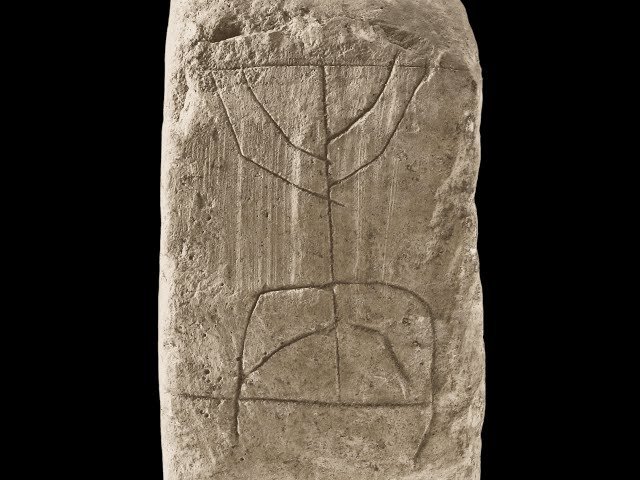
Daroma: Fellowship for Jewish Contemplative Arts was first founded in 2024 in response to the 10/7 war to nurse and fortify Jewish people and allies craving for spiritual center and ancestral connection in this particular age.
Daroma harks to the talmudic passage Harotze Sheyakhim Yadrim, ‘they who wish to gain wisdom must turn south,’ where in the old temple the menorah stood. The graphic of the menorah for Daroma is inspired by a rare etching of the menorah discovered in 2011 “in the drainage channel beneath the 2,000 [years old] Pilgrimage Road in the City of David, adjacent to the Temple Mount in Jerusalem, Israel. The discovery represented what may be among the earliest renderings of the Menorah ever found. “